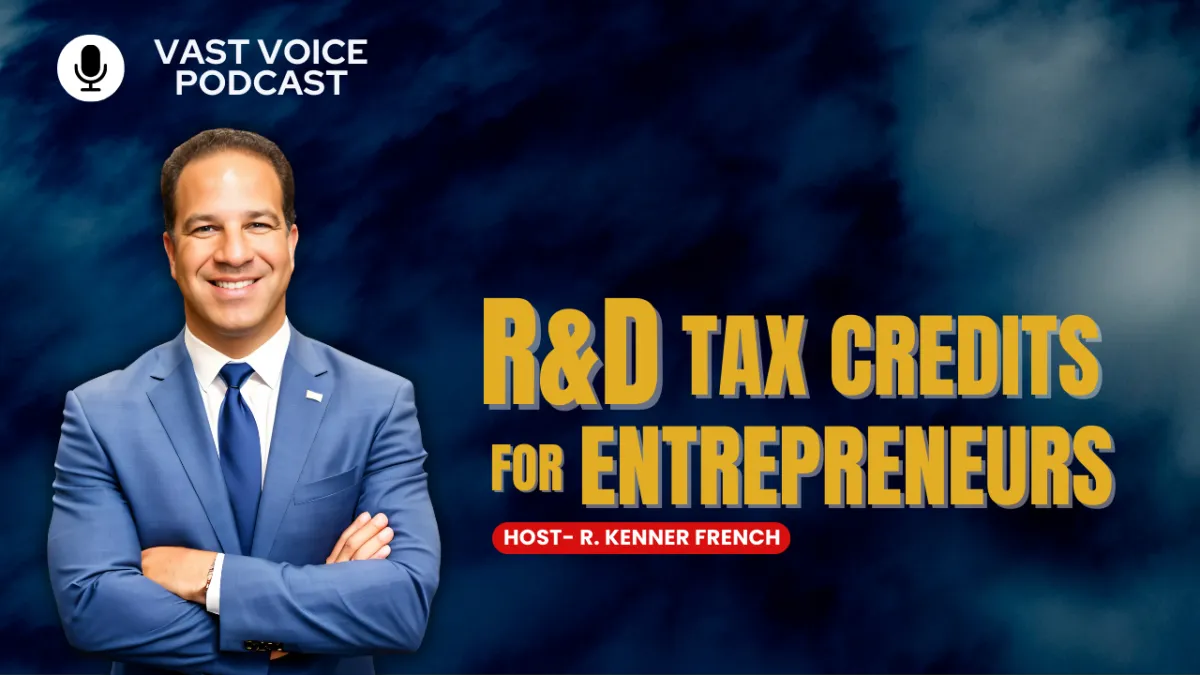
R&D Tax Credits For Entrepreneurs
R. Kenner French opens with a blunt truth many entrepreneurs don’t want to hear: thousands of business owners are walking past real money every year by ignoring R&D tax credits. Even worse, many CPAs and tax professionals forget to bring it up. These credits aren’t obscure loopholes—they’re intentional government incentives designed to reward innovation, experimentation, and progress. If you’re building, testing, improving, or experimenting in your business, chances are you qualify.
One of the biggest misconceptions Kenner clears up is the difference between deductions and credits. An R&D tax credit directly reduces your tax bill dollar for dollar. If you owe $100,000 in taxes and qualify for $10,000 in R&D credits, your new bill is $90,000. That’s real cash flow back into your business. These credits exist to incentivize entrepreneurs to push commerce, technology, and innovation forward—especially within the United States.
Kenner emphasizes that R&D is far broader than most people realize. You don’t need to be a pharmaceutical company or a Silicon Valley startup. If you’re developing AI tools, improving a CRM, building internal software, testing automation, or solving technical challenges, those activities may qualify. Salaries, wages, supplies, computers, utilities, and even your own time spent on research can count—so long as the work is performed in the U.S.
The problem isn’t lack of eligibility; it’s lack of awareness and documentation. Kenner explains that entrepreneurs often fail to compartmentalize their R&D time and expenses throughout the year, making it harder to claim credits later. With better tracking and the right advisor, businesses can even go back two to three years to recover missed credits. That’s found money most owners never realize they’re entitled to.
Beyond tax savings, Kenner frames R&D credits as a strategic growth tool. Lower taxes mean more capital to reinvest, more innovation, and greater agility in the marketplace. His firm, Vast Solutions Group, began investing heavily in R&D years before AI became mainstream—and the result was both tax advantages and long-term competitive positioning. Innovation doesn’t just help your business; it helps the economy, society, and future growth.
Kenner’s message is simple but powerful: talk to your tax professional and ask about R&D tax credits. If they can’t answer confidently, find someone who can. Entrepreneurs who innovate deserve to be rewarded for it—and the government has already set aside the incentives. Ignoring them isn’t cautious—it’s expensive.
If you’re building, testing, improving, or experimenting in your business, R&D tax credits may already be yours. The only real risk is never asking.
Takeaways
• Many entrepreneurs are unaware of R&D tax credits.
• R&D tax credits can significantly reduce tax liability.
• Eligibility includes developing new products or processes.
• Expenses related to research staff can qualify for credits.
• It's essential to track R&D expenses throughout the year.
• Consulting with a tax professional is crucial for maximizing credits.
• Innovative projects in AI can qualify for R&D tax credits.
• Businesses can claim credits for past years if eligible.
• R&D tax credits can improve cash flow for businesses.
• Being proactive about tax credits can lead to substantial savings.
Sound Bites
• You could be the next Google.
• Email us the word book.
• Hopefully this has been helpful.
Listen & Subscribe for More:
🎧 The Vast Voice Podcast → Available on Spotify & Apple Podcasts
▶️ Subscribe on YouTube (@VastSolutionsGroup.com) for expert insights 🚀
📚 Don’t miss Modern Millions by R. Kenner French – the #1 BEST SELLING Amazon book (Entrepreneurship category) 👉 ModernMillions.ai
📚 Amazon Top Selling Author→ https://www.amazon.com/dp/B0FHBS32LG
Got Questions? Reach Us Anytime:
📞 415-212-8189
🕗 Monday–Thursday | 8:00 AM – 5:00 PM (Pacific)
🙏 Thank you for listening & supporting!


