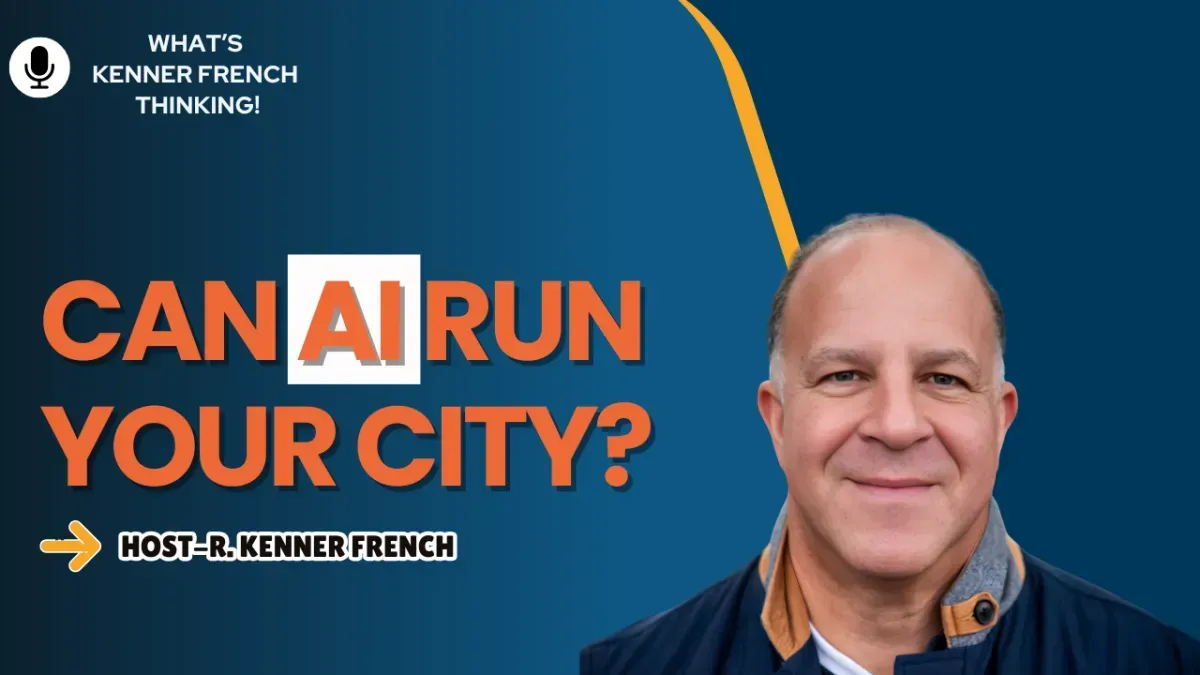
Can AI Run Your City?
City governments around the world are facing a silent crisis.
More demands.
Tighter budgets.
Slower systems.
And citizens who expect Amazon-level speed from public services.
At the same time, artificial intelligence is exploding in capability—but most cities are still asking the same question:
👉 “Is this something we should even touch?”
That hesitation may be the biggest risk of all.
Because the real question isn’t whether AI can run your city…
It’s whether your city can afford to not use it.
⚙️ The Problem: Cities Are Stuck in the Past
Let’s be honest—most city governments still operate like it’s 1995.
Manual paperwork
Slow approvals
Fragmented systems
Poor communication with residents
And the result?
❌ Long wait times
❌ Frustrated citizens
❌ Inefficient spending
❌ Leadership bottlenecks
Even something as simple as getting a permit or asking a question can feel like navigating a maze.
Meanwhile, expectations have changed.
People now expect:
Instant responses
Real-time updates
Digital-first services
And cities are struggling to keep up.
🤖 The Big Idea: An AI-Powered City Manager
What if instead of trying to fix broken systems…
You replaced the operating layer entirely?
That’s exactly the idea being explored in Bainbridge Island, where leaders are proposing an AI-enabled city manager model—not to replace humans, but to supercharge them.
Think of it like this:
👉 AI becomes the “Chief Operating System” of the city
👉 Humans become the decision-makers and leaders
Instead of bureaucracy slowing everything down, AI handles:
Data analysis
Administrative workflows
Communication
Real-time reporting
This concept has even been described as an always-on digital co-pilot for government operations.
🚀 What AI Can Actually Do for a City (Right Now)
This isn’t science fiction. These are real, practical use cases happening today:
1. 💬 24/7 Citizen Communication
AI chatbots can instantly answer:
“When is garbage pickup?”
“How do I apply for a permit?”
“What’s happening in my area?”
Cities like Buenos Aires already use chatbots as a primary communication channel, handling millions of interactions.
2. 📊 Smarter Decision-Making
AI can process massive amounts of city data in seconds:
Budget allocation
Traffic patterns
Public safety trends
Instead of guessing, leaders get data-backed decisions in real time.
3. 🛣️ Infrastructure Optimization
Cities are already using AI to:
Improve traffic flow (Pittsburgh)
Detect potholes faster (San Francisco)
That means:
✔ Less congestion
✔ Faster repairs
✔ Lower costs
4. 🧠 Autonomous Monitoring & Response
Modern AI systems can even:
Monitor live video feeds
Detect incidents
Trigger responses automatically
Some systems can analyze events and respond within seconds without waiting for human input.
5. 🧾 Faster Government Processes
Imagine:
Permits approved in hours instead of weeks
Automated document processing
Instant reporting
AI removes the bottlenecks that slow everything down.
⚠️ The Fear Factor: Why Cities Hesitate
Let’s address the elephant in the room.
People are worried about:
🔒 Data security
👷 Job displacement
🤖 Loss of human control
❓ Unknown consequences
And those concerns are valid.
But here’s the reality:
👉 Avoiding AI doesn’t eliminate risk—it creates a bigger one.
Cities that delay adoption may find themselves:
Outdated
Inefficient
Financially strained
Meanwhile, AI-forward cities gain a massive competitive advantage.
🌱 The Smart Approach: Start Small, Scale Fast
The best strategy isn’t to go “all in” overnight.
It’s to start small and scale intelligently.
That means:
Begin with low-risk tasks:
Chatbots
Scheduling
Data organization
Build trust and transparency
Gradually expand into:
Decision support
Predictive analytics
Operational automation
This phased approach allows cities to:
✔ Reduce risk
✔ Build confidence
✔ Show quick wins
🌍 The Bigger Picture: A New Era of Governance
We are entering a world where:
Cities run on real-time data
Decisions happen instantly
Citizens interact digitally first
Governments operate like high-performance systems
This isn’t just about technology.
It’s about:
👉 Efficiency
👉 Transparency
👉 Trust
👉 Speed
🔥 The Bottom Line: The Cities That Win Will Be the Ones That Adapt
Here’s the truth most people aren’t saying:
The future of cities won’t be determined by population size…
It will be determined by technology adoption speed.
Cities that embrace AI will:
Deliver better services
Operate at lower costs
Attract businesses and talent
Cities that don’t?
They risk becoming irrelevant.
💡 Final Thought
AI won’t run your city overnight.
But it will quietly become the system behind everything.
And the leaders who understand this early…
Will build cities that are not just functional—
But exceptional.
Schedule Your Free Strategy Call Now!
📚 Don’t miss Modern Millions by R. Kenner French – the #1 BEST SELLING Amazon book (Entrepreneurship category)👉ModernMillions.ai
📚 Amazon Top Selling Author→https://www.amazon.com/dp/B0FHBS32LG


