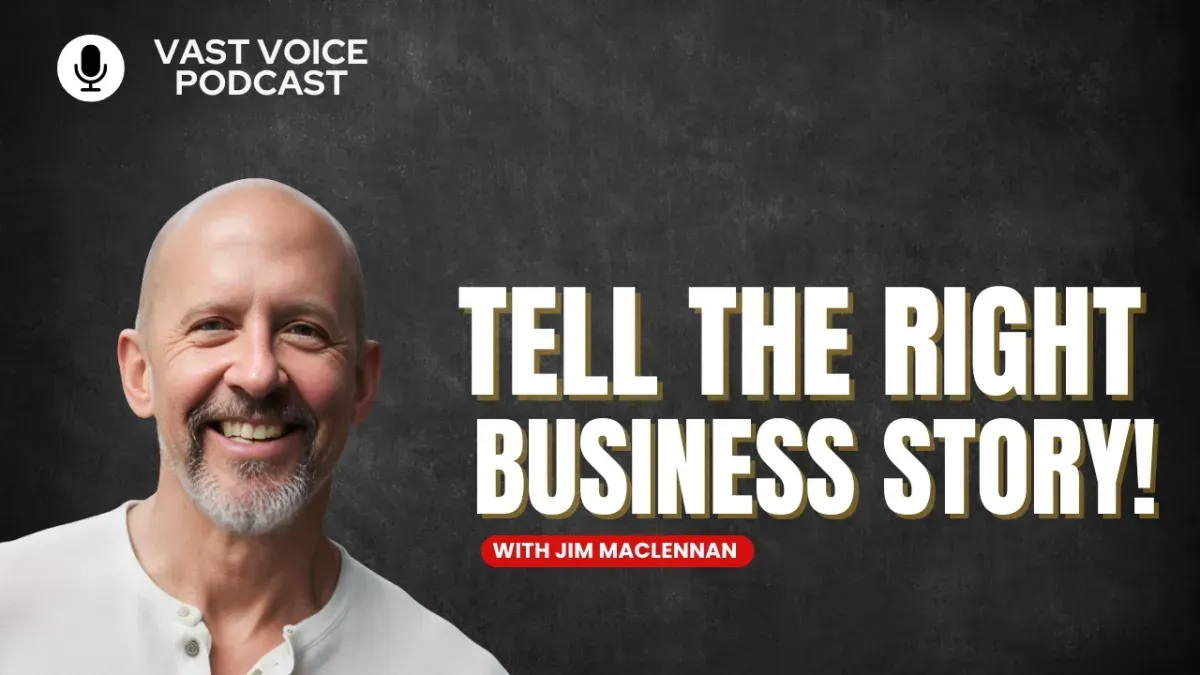
Tell The Right Business Story!
When it comes to entrepreneurship, having a great idea doesn’t automatically mean success. What really separates memorable startups and thriving small businesses from the rest is how the story behind the idea is told. In a recent VastSolutionsGroup.com podcast episode, host R. Kenner French sat down with seasoned strategist and venture professional Jim MacLennan to explore this exact topic: how entrepreneurs can craft and communicate a compelling business narrative that not only resonates — but actually helps them raise capital, build community, and grow profitably.
Let’s dive deeper into what they shared 👇
🧠 The Biggest Mistake Founders Make: Telling the Wrong Story
Most founders don’t fail because their products are bad — they fail because their story doesn’t connect. As Jim explains, entrepreneurs often:
❌ Lead with the least exciting part
Instead of telling a story that quickly explains the customer’s problem and the value the business brings, too many founders start by talking about features or internal details that only they care about. This immediately loses listeners — whether they’re customers, investors, or partners.
🧡 Forget to validate before they pitch
Founders fall in love with their product too soon, building a narrative around what they want rather than what the customer actually needs. Jim stresses that knowing your customers’ problems deeply and validating that your solution works is essential before you start asking for money.
👥 Tailor Your Story to Your Audience
One size does not fit all. Your narrative should change depending on who you’re talking to:
Investors want to hear about scalability and long-term return.
Partners care about strategic fit and mutual benefits.
Customers want to know how your solution makes their life easier.
✨ This means the same core story can — and should — be framed differently depending on whether you’re pitching, selling, or inspiring.
🚀 Storytelling Isn’t Just for Pitch Decks — It’s the Heart of Growth
Telling a compelling business story goes beyond pitches. It influences:
💡 Customer trust
Stories that speak to transformation, relief from pain, or emotional connection are far more memorable than facts or features alone. Research even shows stories are more memorable than straight data — they activate emotional centers in the brain and create stronger audience engagement.
🤝 Brand connection
Authentic narrative helps your audience feel seen. Customers don’t just buy what you do — they buy why you do it. When your story reflects shared values, your brand builds trust and loyalty.
📣 Team alignment
Internally, storytelling helps unify your team around common purpose and vision, making daily work feel meaningful and connected to a bigger mission.
🛠️ The Right Framework for a Great Business Story
Here’s a simplified formula to strengthen your narrative:
1. Start with Why
Go beyond product details — explain why your business exists. What problem are you solving? Why should the world care?
Example: “We help small business owners unlock growth by simplifying complex processes — so they can focus on what they love.”
2. Highlight the Transformation
People connect to transformation, not features. Show where your audience started, and where your business helps them go.
3. Be Authentic
Avoid jargon — speak like a real human. Vulnerability builds trust.
4. Tailor to Who You’re Speaking To
Adjust the emphasis based on your listener’s values — investors vs. customers vs. partners.
🌱 Using Storytelling to Build Community and Purpose
Jim also shared how he leveraged storytelling beyond just business — to build community and purpose. Inspired by a vision to leave a better world for future generations, he’s now growing a purpose-driven initiative focused on forestry restoration and sustainability. This mission-oriented narrative attracts aligned partners and investors who share that vision.
When your story ties to a larger purpose — whether environmental, social, or community-focused — it amplifies your voice and makes your business feel meaningful, not transactional.
🔄 Leverage Tools — But Don’t Let Them Replace You
AI can be a powerful tool to augment your storytelling — helping with research, content creation, and refining messages — but it shouldn’t replace your authentic voice. Jim calls AI a force multiplier, not a substitute for genuine entrepreneurial insight.
💬 Final Takeaways
Here are the key reminders from this conversation:
🔑 Strong business storytelling is one of your greatest strategic assets.
🎯 Know your audience before you pitch or message.
🧩 Authentic, tailored narratives outperform straight facts or numbers.
🌍 Purpose-driven stories help attract community, customers, and capital.
🤖 Use technology (like AI) to support your story — not define it.
🎧 Ready to Go Further?
If you want to sharpen your storytelling skills, check out the full podcast and resources from VastSolutionsGroup.com — and start refining your narrative today. A better story isn’t just communication… it’s business growth in action! 🚀
Book Your Free Strategy Call Today!
📚 Don’t miss Modern Millions by R. Kenner French – the #1 BEST SELLING Amazon book (Entrepreneurship category) 👉ModernMillions.ai
📚 Amazon Top Selling Author→https://www.amazon.com/dp/B0FHBS32LG


