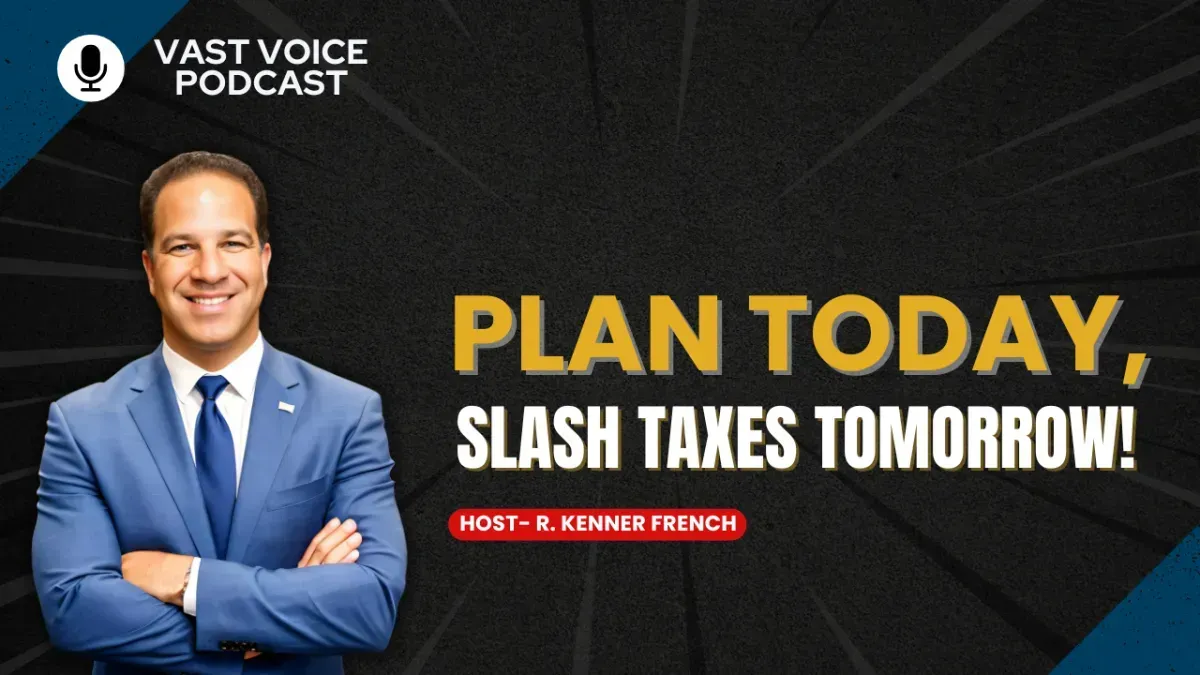
Plan Today, Slash Taxes Tomorrow!
When it comes to managing money as an entrepreneur, one of the most overlooked and under-prioritized areas is tax planning. Most business owners don’t think about their taxes until tax season arrives — often scrambling in March and April to gather receipts and figure out deductions. Unfortunately, this reactive approach usually results in higher tax bills and missed opportunities.
But what if improving your tax outcome didn’t begin with panic in April, but with intentional strategy the moment the year begins?
That’s the core message explored in the Vast Voice podcast episode titled “Plan Today, Slash Taxes Tomorrow!” where R. Kenner French and Lily Falconer break down why modern entrepreneurs should rewire how they think about tax planning.
🚫 The Problem with Procrastinating Tax Planning
It’s human nature to delay what feels daunting, and taxes certainly fall into that category for many. According to Kenner and Lily, most small business owners treat tax preparation like a chore — something to check off their list as the April deadline gets closer.
This makes sense at first glance: gathering receipts, expense records, and random documents isn’t exactly thrilling. But the consequence of this delay is steep. Waiting until the last minute means:
Fewer options for tax-reducing strategies.
No time to adjust income or business structure.
Limited flexibility to optimize quarterly planning.
Higher likelihood of writing a large check to the IRS with little opportunity to make strategic changes.
In short, waiting until tax season doesn’t save effort — it limits results.
📆 The Power of Year-Round Planning
A forward-looking tax strategy starts on January 1, not April 15. That’s when entrepreneurs should begin reviewing their financial position, projecting cash flow, and taking a proactive stance on tax liabilities.
Here are key components of effective year-round tax planning:
✔️ Adjust Cash Flow Early
Understanding your cash flow early in the year gives you room to make strategic financial moves — like investing in capital expenditures or timing income recognition — in ways that reduce your tax exposure.
✔️ Review Payroll and Employee Numbers
Employee counts, payroll structures, and related tax implications can vary dramatically depending on how your business evolves throughout the year. Early review allows you to optimize hiring decisions with tax-efficient outcomes in mind.
✔️ Quarterly Meetings with a Tax Professional
Rather than waiting to hand over documents in March, meet consistently with your advisor throughout the year. These sessions uncover potential deductions, changes in law, and strategic opportunities long before filing deadlines.
🔍 Rear-View Mirror vs. Forward-Focused Advisors
One of the most powerful analogies Kenner shares in the episode is this:
Driving your taxes with a rear-view mirror just tells you where you’ve already been — not where you’re going.
Many traditional tax professionals operate this way — reviewing last year’s numbers and reacting to them. They may be good at compliance, but they’re not always effective at strategy. The result? You may end up saving less than you could have.
By contrast, a forward-focused advisor looks at the entire trajectory of your business. The goal is to identify strategic opportunities before they become tax obligations. This requires planning, forecasting, and actionable insights — not just compliance.
💡 What Proactive Tax Planning Looks Like
Here’s a simple breakdown of how entrepreneurship changes when you move from reactive to proactive tax planning:
Reactive (Traditional)Proactive (Modern)Wait until tax season to think about taxesStart January 1 with a tax roadmapFocus on receipts and deductionsFocus on strategy and savings opportunitiesOne annual tax meetingQuarterly check-ins with your tax professionalLimited leverage of financial dataUse data, projections, and insights to make better decisionsHigher tax liabilities by defaultReduced liabilities through opportunity capture
📈 The Impact on Your Bottom Line
When you prioritize tax strategy throughout the year, you:
🔹 Reduce Your Tax Liability
Proactive planning exposes more deductions and credits while enabling timing strategies that limit taxable income.
🔹 Improve Predictability
A year-long approach means fewer surprises. Instead of scrambling in April, you know what to expect and can plan decisions around it.
🔹 Increase Cash Flow Control
You can structure cash flow events — such as large purchases or revenue recognition — in ways that legally reduce your tax burden.
🔹 Build Confidence
When tax planning becomes a strategic tool rather than a burdensome afterthought, you free up mental energy to focus on growth, not stress.
👥 Choosing the Right Advisor
A big part of achieving proactive tax planning is working with the right advisor — one who doesn’t just prepare your taxes but partners with you to shape your financial future.
Here’s what to look for:
Forward-thinking mindset — not just reactive compliance.
Quarterly planning support — to stay ahead of tax changes.
Ability to project forward — rather than just analyze past results.
Commitment to your long-term success — not just filing returns.
If your current tax professional focuses solely on “rear-view mirror” reporting, it may be time to explore new advisory support that helps you drive forward, not backward.
🧠 Final Takeaway
Taxes shouldn’t be something you dread — they should be a catalyst for smarter strategy. The earlier you start planning, the more opportunities you uncover to protect your wealth, optimize deductions, and build a smoother financial journey as an entrepreneur.
Schedule Your Free Strategy Call Now!
📚 Don’t miss Modern Millions by R. Kenner French – the #1 BEST SELLING Amazon book (Entrepreneurship category)👉ModernMillions.ai
📚 Amazon Top Selling Author→https://www.amazon.com/dp/B0FHBS32LG


